
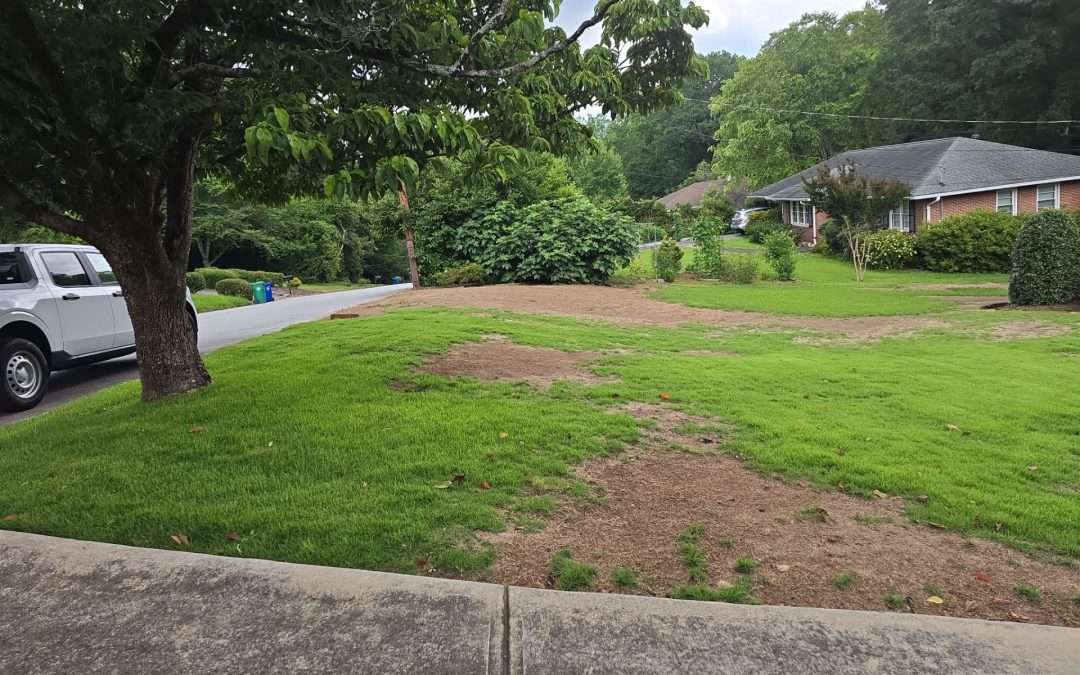
July Lawn Care Update from Beyond The Curb Landscaping
If your Zoysia lawn is suddenly struggling, you’re not alone. Across North Georgia, we’re seeing a surge in fungal outbreaks due to record-breaking rainfall and extended periods of high humidity over the past several months.
While Zoysia is known for being a hardy, low-maintenance grass, it doesn’t love having “wet feet” for too long. The constant rain has left many lawns waterlogged, stressed, and highly susceptible to turf diseases.
From soggy soil to prolonged leaf wetness, the environmental conditions this summer have created a perfect storm for fungus to thrive—especially in lawns already dense with thatch or poor drainage.
What’s Happening to Zoysia Lawns Right Now?
The excessive moisture has dramatically increased the presence of turf fungi that feed on organic matter—especially in Zoysia, which tends to hold onto moisture longer than other grasses. Some common fungal issues we’re seeing include:
- Large Patch (Rhizoctonia) – One of the most common diseases in Zoysia. It starts as small circles of tan or brown grass that quickly expand.
- Leaf Spot and Blight – Brown or black lesions on grass blades, often leading to thinning or patchy turf.
- Mildew or Rust Fungi – These cause dull, dusty discoloration and may leave powdery residue on the grass surface.
If your lawn has blackened, mushy patches, strange circular patterns, or looks worse despite all the rain—chances are it’s not just “summer stress” but an active fungal issue.
What You Can Do Right Now
Dealing with fungus is all about timing and conditions. Here’s what we recommend to protect and restore your lawn:
✅ 1. Apply a Fungicide (Sooner Than Later)
Fungal diseases can move fast, especially in this kind of weather. Early treatment is key to stopping the spread and helping your lawn recover. We can apply a targeted fungicide depending on what you’re seeing.
✅ 2. Aerate to Improve Drainage
Aeration helps break up compacted soil, improve oxygen flow, and allow excess water to drain—creating a less hospitable environment for fungus. It also preps the lawn for fall growth.
✅ 3. Avoid Overwatering
This may sound odd given all the rain, but if you’re running irrigation on top of regular storms, you may be making things worse. Water only if needed, and always in the early morning hours.
✅ 4. Keep Mowing—But Not Too Short
Continue regular mowing with sharp blades, but raise your mowing height slightly. Cutting too low adds extra stress and makes it easier for disease to spread.
Beyond The Curb is Here to Help
At Beyond The Curb Landscaping, we’re actively monitoring fungal activity across the region and adjusting our turf care strategies to protect your lawn. Whether it’s fungicide applications, aeration services, or simply evaluating what’s going on in your yard—we’re here for you.
If your lawn isn’t looking its best, let’s take a closer look. The earlier we act, the better your chances of full recovery as we head into late summer.
📞 Call us today to schedule a lawn inspection or treatment plan or through our website: beyondthecurb.com.
